
Children’s Data in 2026: What Providers Need to Know Now
Key insights from the Koffeeklatch webinar with Annabel Kaye and Susan Mackie
Children’s data is changing rapidly. While many organisations have spent years building confidence around GDPR and data protection practices, the digital landscape continues to evolve bringing new responsibilities, new risks and new questions for providers working with children and families.
In this Koffeeklatch webinar, attendees explored what has changed in children’s data protection, what organisations need to pay attention to now, and how to prepare for the future.
The way children’s information is collected, stored and used is becoming increasingly complex. New technology, changing expectations and evolving guidance mean that organisations must continue to review how they manage personal information and ensure children’s privacy remains at the heart of decision-making.
Children’s Data Has Not Stood Still
The conversation around children’s data has moved beyond simply asking whether an organisation is GDPR compliant.
Today, providers need to consider:
- How are we using children’s information?
- Has the way we collect or store data changed?
- Are our systems still suitable?
- Do families understand how their information is used?
- Are we protecting data throughout its entire journey?
Digital systems have become more advanced, offering valuable support for organisations, but they have also introduced additional layers of responsibility. Everyday platforms can now handle large amounts of personal information, making it essential to understand exactly what data is being collected and how it is managed.
Artificial Intelligence and Children’s Data
Artificial intelligence is increasingly becoming part of everyday systems.
AI tools can support communication, administration and decision-making, but they also introduce important questions around transparency, accountability and privacy.
For organisations working with children, it is important to understand:
- Where AI is being used
- Whether suppliers are using AI within their services
- How children’s information may be processed
- Whether existing policies reflect current technology
The answer is not to avoid innovation. Technology can provide real benefits, but it must be introduced responsibly, with appropriate safeguards in place.
Understanding how systems work behind the scenes is now just as important as choosing the right tools.
Children’s Images: Protecting Privacy in a Digital World
Children’s images require careful consideration. The way photographs and videos are created, stored and shared has changed significantly, creating new challenges for organisations.
Images can move quickly between platforms and may exist in multiple locations. This makes it essential for providers to understand where images are stored, who can access them and how long they are retained.
Good practice includes regularly reviewing:
- Consent processes
- Storage arrangements
- Access permissions
- Sharing procedures
- Retention periods
A child’s image is personal data, and protecting it requires the same care and attention as any other sensitive information.
Digital Systems and Data Responsibility
Booking platforms and management systems have transformed the way many organisations operate. They can make processes easier, improve communication and support better service delivery.
However, more powerful systems can also mean more complicated data responsibilities.
A single platform may contain:
- Children’s details
- Parent or carer information
- Attendance records
- Communication records
- Important support information
Providers should regularly review:
- What information is being collected
- Whether all information is necessary
- Who has access
- How long information is kept
- What happens when systems or suppliers change
Responsible data management means knowing not only what information you hold, but why you hold it and how it is protected.
Safeguarding and Retention: Keeping the Right Balance
Safeguarding expectations continue to evolve, particularly around how children’s records are stored and managed.
Keeping information forever is not automatically the safest option. Organisations need clear processes to decide what information should be retained, for how long, and when it should be securely removed.
A strong approach includes:
- Clear retention schedules
- Secure storage
- Controlled access
- Regular reviews
Children’s data protection should become part of everyday organisational practice rather than an occasional compliance exercise.
Moving Beyond “We Already Did GDPR”
Having GDPR processes in place is an important foundation, but it is no longer enough to simply complete a checklist and move on.
Technology changes. Services develop. Expectations grow.
Organisations should regularly revisit:
- Privacy notices
- Data maps
- Supplier agreements
- Staff awareness
- Consent procedures
- Retention policies
The goal is not only compliance — it is creating a culture where children’s information is respected and protected.
What Providers Should Review Now
A proactive approach to children’s data starts with understanding the current position and identifying areas for improvement.
Key actions include:
Review your systems
Know where children’s information is stored and how it moves across different platforms.
Understand your suppliers
Make sure external providers handle data appropriately and transparently.
Consider the impact of AI
Identify where automated tools are being used and whether additional safeguards are needed.
Update policies regularly
Ensure procedures reflect how information is actually collected and used today.
Make data reviews ongoing
Regular checks help organisations stay prepared as technology continues to evolve.
Looking Ahead
Children’s data protection in 2026 is about more than meeting requirements. It is about building trust, protecting privacy and making responsible choices in an increasingly digital world.
The organisations that succeed will be those that stay informed, review their practices regularly and recognise that protecting children’s data is a continuous responsibility.
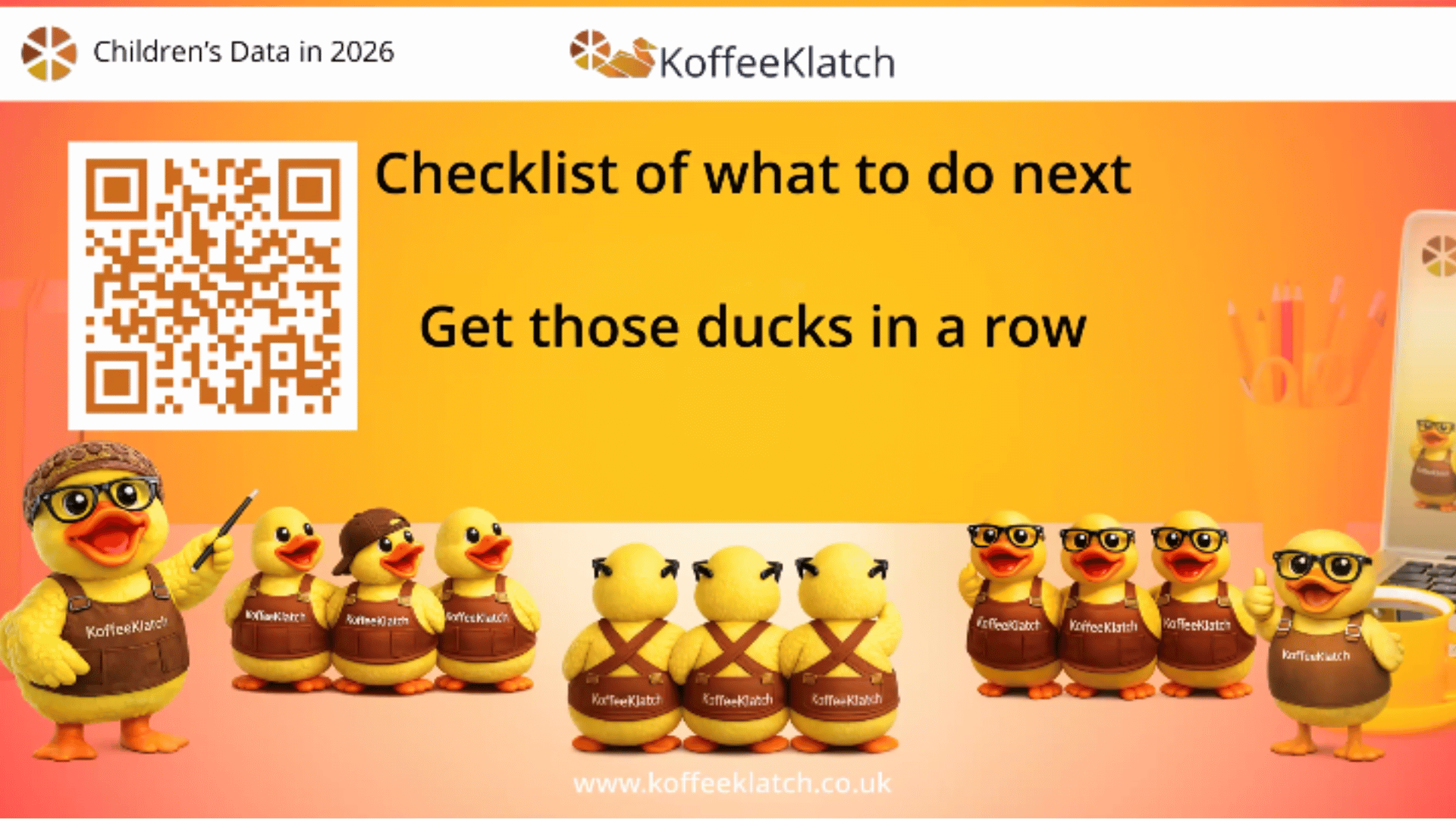
What to do next?
Scan the QR code below and download the checklist.
This blog has been created following a Koffeeklatch session exploring Children’s Data in 2026, helping providers navigate changing expectations, new technologies and evolving data protection responsibilities. Click here to watch the full recording. Click here to watch the full recording of the webinar.
Need more support? Email us at hello@i-cap.co.uk
About KoffeeKlatch:
Koffeeklatch, headed by Annabel Kaye, has been supporting small business owners for over 15 years. Their experienced team combines practical expertise and in-depth knowledge with a strong understanding of the challenges businesses face.