
Top Tips for a Safe and Fun Day at the Beach with Little Ones
From Daisy First Aid:
The sun is finally making an appearance (hurrah!), and if you might be planning a seaside escape with your little adventurers. A trip to the beach is a brilliant way for children to burn off energy, get fresh air, and make magical summer memories. But the beach, for all its beauty, comes with a few safety risks — especially for babies and toddlers.
Here are our essential tips for a safe, sunny day out at the coast:
1. Teach Your Child to Swim
It might seem obvious, but swimming is a life-saving skill. The earlier your child becomes confident in the water, the better. Start with swim lessons, even in the local pool, and teach them the difference between calm pool water and the unpredictable sea. Knowing how to float, tread water, and stay calm can make a massive difference in an emergency.
2. Float to Live
One of the most important water survival techniques is teaching your child to float on their back if they get into trouble. This helps them conserve energy, stay calm, and gives them the chance to shout or signal for help. Practice this together – it’s a skill that could save their life.
3. Use a Life Jacket or Arm Bands for Non-Swimmers
If your child isn’t a confident swimmer or is still very young, a well-fitted life jacket or buoyancy aid is essential. It’s not a substitute for supervision, but it adds an extra layer of protection and peace of mind.
4. Choose Lifeguarded Beaches
Always opt for beaches with RNLI lifeguards. They’re trained to spot dangers like rip currents and can act quickly if something goes wrong. Make sure your children only swim between the red and yellow flags – that’s the safe zone monitored by lifeguards.
5. Keep a Watchful Eye – Always
Supervision is key. It only takes seconds for a child to get into trouble in the water. Don’t rely on lifeguards or other beachgoers – make sure someone is always actively watching your child, even if they’re just paddling in the shallows.
6. Know That Drowning is Silent
Forget what the movies show – drowning isn’t dramatic. There’s often no splashing or shouting. It’s fast and quiet. Children can slip under the surface without a sound, so stay close, stay alert, and don’t let them go out of their depth.
7. Create a Plan in Case They Get Lost
Crowded beaches can be overwhelming. Pick a clear, visible meeting point – like the lifeguard hut or a bright beach umbrella – and show your child where it is. Teach them to stay where they are if they get lost, or to look for a lifeguard or another parent with children to ask for help.
8. Slather on the Sun Cream
Choose a broad-spectrum, water-resistant SPF 30+ sunscreen designed for children. Apply it 30 minutes before sun exposure and reapply every two hours – more often if they’re in and out of the water. Don’t forget ears, necks, feet and backs of knees!
9. Dress for Sun Protection
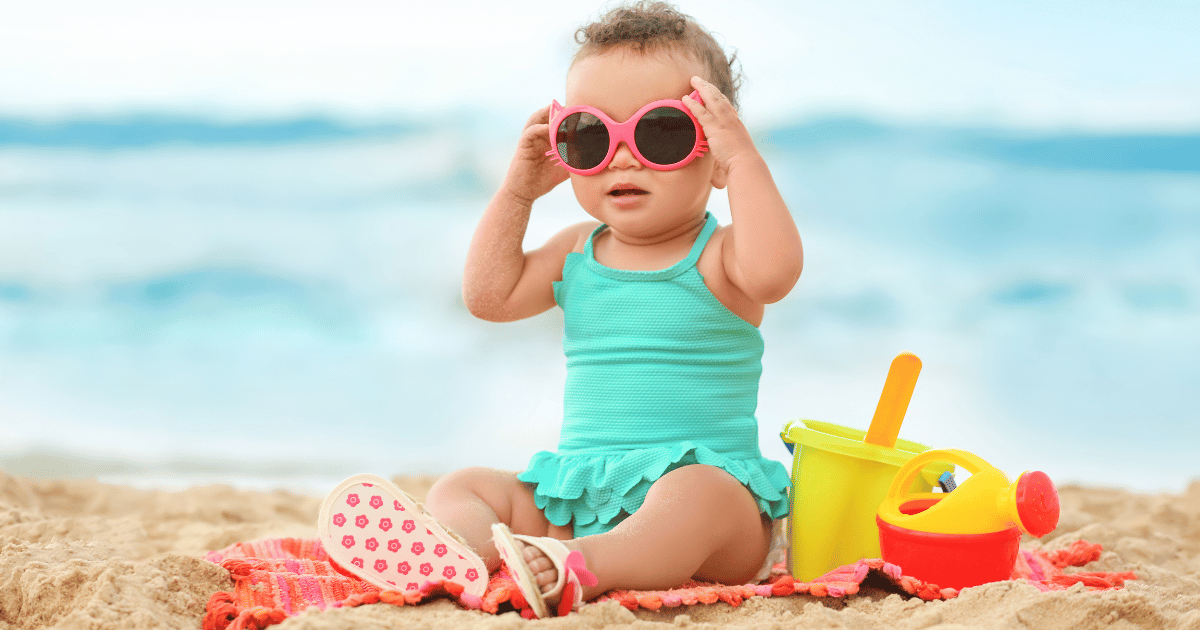
Light, long-sleeved tops, wide-brimmed hats, and UV-protective swimwear are excellent for shielding delicate skin. And don’t forget baby sunglasses – their eyes need protection too!
10. Stay Hydrated and Snack Smart
Pack plenty of water and keep offering drinks regularly – little ones dehydrate quickly in the sun. Add healthy snacks to keep their energy up, especially after a splash in the sea.
11. Watch for Signs of Heat Exhaustion
If your child looks flushed, tired or is unusually irritable take a break in the shade, cool them down, and offer water. If they don’t improve seek advice from a medical professional.
Have fun and be safe this summer!
At Daisy First Aid we provide essential first aid skills to parents, carers, childcare professionals and anyone who works with children so they and their customers can be confident should the unexpected happen.
If you’d like to find out more about our classes head to our website www.daisyfirstaid.com and pop in your postcode where you’ll be directed to your nearest Daisy First Aid trainer.