
The Almanack of Naval Ravikant: The Business Book That Feels Like a Life Upgrade
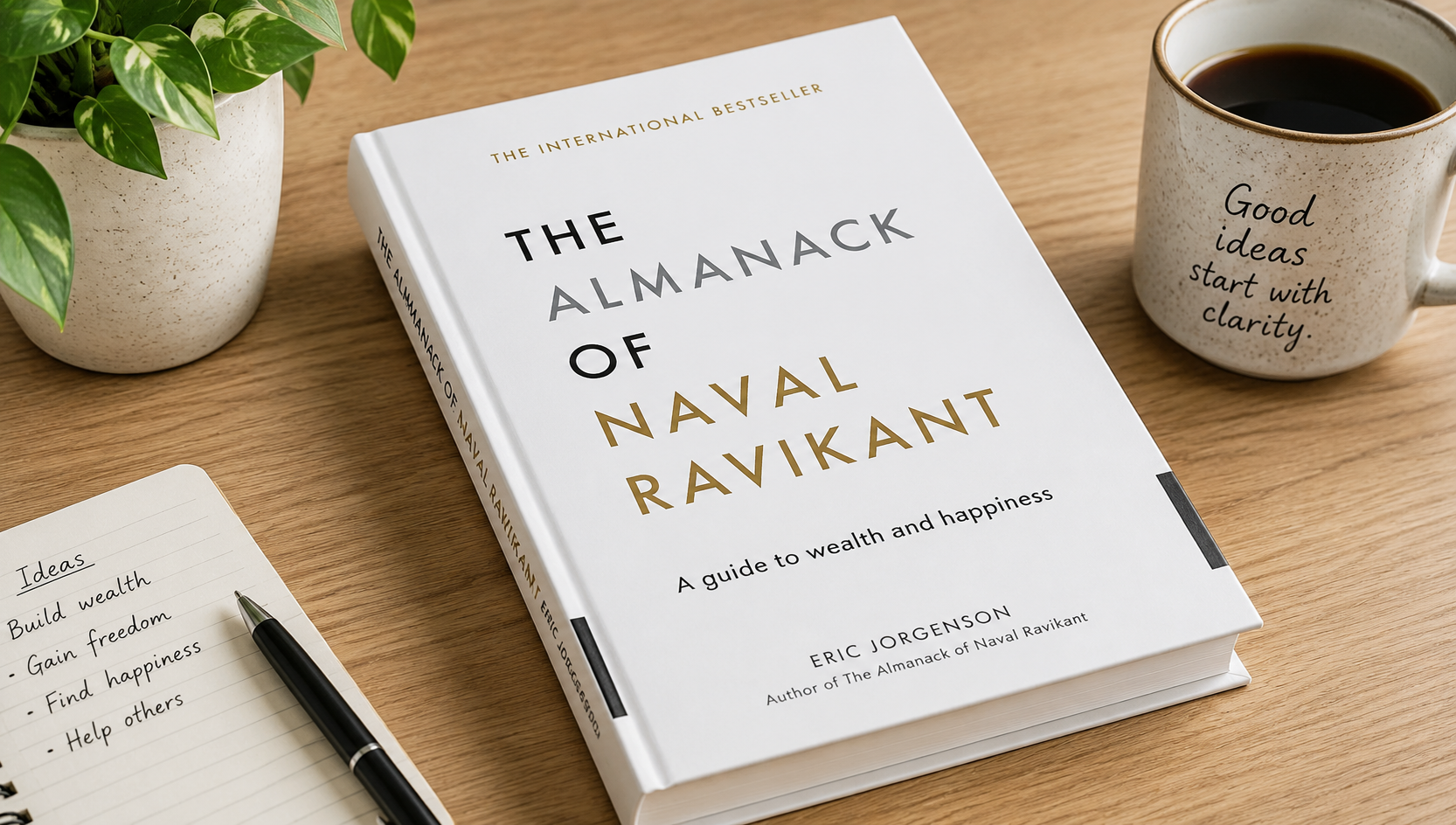
You know when someone recommends a book and says, “This completely changed how I think”?
Normally, that sentence is followed by disappointment, confusion, or a man on page 47 telling you to wake up at 4am and eat cold grapes for “mental clarity.”
Thankfully, The Almanack of Naval Ravikant by Eric Jorgenson isn’t like that.
This is one of those rare books that makes you stop mid-page and think:
“Ohhhhhh… I may have been making life harder than it needs to be.”
So, if you haven’t got time to read the whole thing – because you’re busy running classes, answering parent messages, chasing invoices, finding missing glue sticks and wondering why your inbox regenerates overnight like a science experiment – here’s your done-for-you reading service version.
Tea optional.
Notebook recommended.
Who Is Naval Ravikant?
First things first.
Naval Ravikant is an entrepreneur, investor, philosopher-type thinker, and apparently someone who has figured out how to be both successful and calm at the same time.
Which honestly feels suspicious.
He’s best known for investing early in companies like Twitter and Uber, but the reason people love him is because of how he thinks about:
- wealth
- happiness
- business
- freedom
- time
- decision-making
The book itself isn’t written directly by Naval. Eric Jorgenson compiled Naval’s interviews, podcasts, tweets, and ideas into one readable guide.
Think of it as the highlights album of someone’s brain.
The Big Idea of the Book
Here’s the core message in one sentence:
Build wealth so you can gain freedom.
Not freedom to buy a gold-plated speedboat.
Freedom to choose how you spend your life.
That’s the key distinction throughout the book.
Naval believes the real goal isn’t money itself.
It’s autonomy.
The ability to:
- work when you want
- choose projects you enjoy
- spend time with people you love
- avoid living permanently stressed
And honestly, for business owners, that hits hard.
Because many of us started businesses wanting freedom…
…and accidentally created jobs where we answer WhatsApps at 9:47pm while eating cereal over the sink.
The Wealth Section: Work Smarter, Not Just Harder
One of the biggest themes in the book is that you do not get wealthy simply by working more hours.
Which may come as welcome news to anyone currently functioning entirely on caffeine and determination.
Naval explains that wealth is created through:
- ownership
- systems
- leverage
In plain English:
You need things that work without you physically doing every single task yourself.
He talks a lot about leverage – using tools, technology, teams, media, and systems to multiply your efforts.
For example:
- recording a course once instead of repeating yourself endlessly
- automating bookings
- creating reusable resources
- building processes your team can follow
- using social media content that keeps working after you post it
Essentially:
Stop rebuilding the wheel every Tuesday evening.
This section is brilliant for small business owners because it forces you to ask:
“Am I building a business… or just becoming the busiest employee in it?”
Slightly uncomfortable question.
Very important one.
The Happiness Section: Surprisingly Powerful
Now here’s the bit I didn’t expect.
A huge chunk of the book focuses on happiness.
Not fake positivity.
Not “manifesting abundance” while ignoring reality.
Actual inner peace.
Naval’s view is that happiness is something you develop internally, not something waiting for you at the end of a to-do list.
Which is awkward news for those of us who keep saying:
“I’ll relax after this term.”
“I’ll slow down after summer.”
“I’ll feel better once things settle down.”
Because things rarely “settle down,” do they?
There’s always another launch.
Another admin job.
Another school holiday.
Another parent asking if their child can “just try one session for free.”
Naval argues that happiness comes from:
- wanting less
- being present
- protecting your mind
- removing unnecessary drama
- learning to enjoy simple things
Which sounds obvious…
…but also slightly revolutionary in today’s permanently exhausted business culture.
The Decision-Making Advice Is Gold
One of the best parts of the book is how Naval thinks about decisions.
He believes successful people:
- think independently
- avoid following the crowd blindly
- make long-term decisions
- protect their time carefully
There’s a brilliant idea in the book where he explains that if something isn’t a clear “yes,” it should probably be a “no.”
Now obviously that’s easier said than done when you run a business.
Because activity providers are basically professional yes-people.
“Yes, we can fit them in.”
“Yes, we’ll help.”
“Yes, we’ll stay late.”
“Yes, we’ll answer messages at midnight apparently.”
But the book gently reminds you that every yes costs time, energy, and focus.
And if you say yes to everything…
you eventually run out of yourself.
The Learning Section: Become Obsessed With Improving
Naval is a huge believer in learning.
Not formal qualifications necessarily.
Not collecting certificates like Pokémon cards.
Actual curiosity.
Reading.
Thinking.
Questioning things.
Learning skills that genuinely improve your life.
He believes the internet has made learning almost limitless and that people who continue learning gain a massive advantage over time.
And honestly, this feels especially relevant for small business owners because the people who grow most successfully are usually the people willing to adapt.
The world changes quickly.
Marketing changes.
Technology changes.
Customer behaviour changes.
The businesses that survive are usually the ones willing to keep evolving instead of saying:
“Well this worked in 2017…”
So… Is It Worth Reading?
Absolutely.
Especially if:
- you feel overwhelmed
- you’re stuck in constant “busy mode”
- you want more freedom
- you’re building a business but forgetting to build a life
- you enjoy books that make you think deeply without making you feel stupid
The beauty of The Almanack of Naval Ravikant is that it doesn’t scream at you.
It quietly shifts your perspective.
And often, those are the books that stay with you longest.
Final Takeaway
If I had to summarise the entire book in one sentence, it would probably be this:
Success is not about cramming more into your life. It’s about creating a life you actually want to live.
Simple.
Wise.
Slightly confronting.
A bit like discovering your “quick admin job” has somehow stolen two hours of your afternoon.
This book won’t magically solve all your problems.
But it will make you question:
- how you spend your time
- what success really means to you
- whether your business is serving your life… or consuming it
And honestly?
That’s probably a worthwhile conversation for all of us to have.
Speak soon,
Jenni
Team ICAP