
The Art of Resilience: Strategies for an Unbreakable Mind and Body
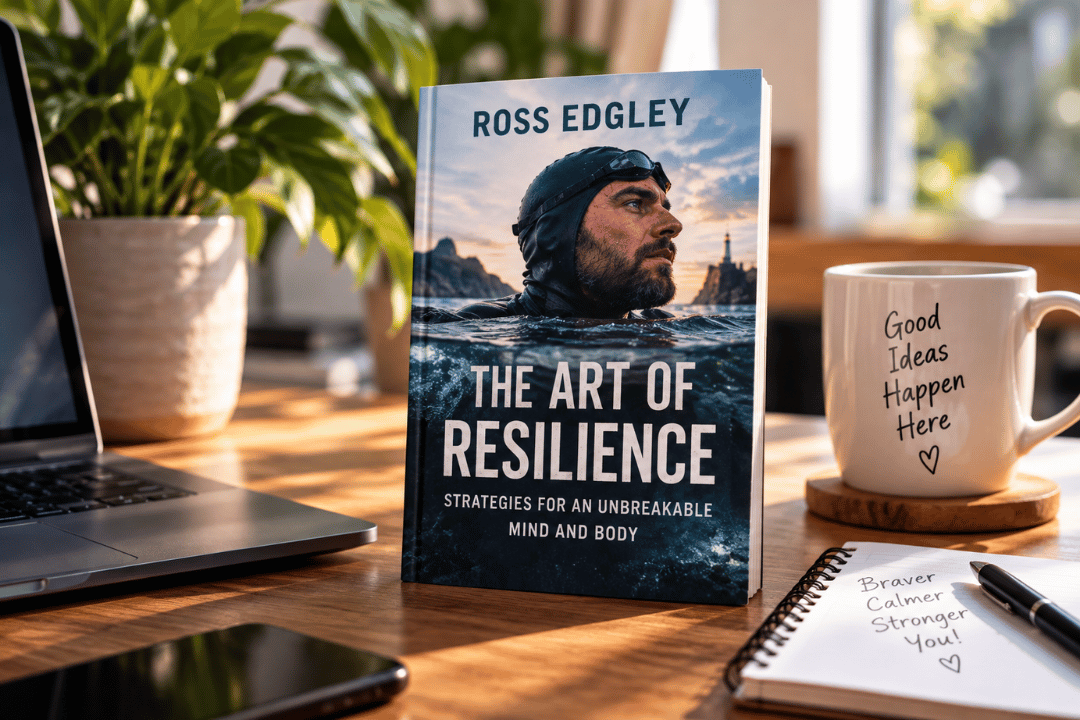
Ross Edgley, resilience and what it can teach us about running a children’s activity business
Have you ever had one of those days?
You know the ones.
The phone won’t stop.
A member of staff calls in sick.
A parent is unhappy.
Bookings are down.
Your inbox looks like it has developed a life of its own.
And then, just when you think you’ve finally got everything under control…
Someone asks if they can have a refund for a session they forgot to attend three weeks ago.
Lovely.
Running a children’s activity business isn’t for the faint-hearted.
It’s incredibly rewarding.
It’s meaningful.
It can be great fun.
But let’s be honest…
It can also be REALLY tough.
Which got me thinking about resilience.
And one of the people who knows a thing or two about resilience is Ross Edgley.
If you haven’t come across Ross before, he’s an adventurer and author who became the first person to swim around Great Britain.
That’s around 1,780 miles.
He spent 157 days doing it.
He dealt with jellyfish, storms, exhaustion, cold water and all the other lovely things you might expect when deciding that swimming around Britain sounds like a good idea.
His book, The Art of Resilience, explores what happens when we push the human body and mind to its limits.
Now…
I’m not suggesting you need to start swimming around the British coastline.
Although if you do, please let me know.
I’d like to hear how that goes.
But there are some brilliant lessons in resilience that we can take from Ross and apply to running our businesses.
Because resilience isn’t just something you need when you’re swimming through freezing water.
You need it when you’re running a children’s activity business too.
Resilience in real life
You might not be battling the North Sea.
But you probably have your own version of rough seas.
Maybe it’s:
- Dealing with unpredictable income.
- Managing a team.
- Trying to recruit brilliant staff.
- Keeping parents happy.
- Handling complaints.
- Dealing with cancellations.
- Working evenings and weekends.
- Trying to grow the business without completely exhausting yourself.
- Feeling like absolutely EVERYTHING depends on you.
And then there’s the emotional side.
Because when you own a business, it’s very difficult to leave work at work.
If a class goes brilliantly, you feel brilliant.
If something goes wrong, you think about it at 2am.
If bookings are flying in, you feel like a genius.
If bookings suddenly drop…
You start questioning every decision you’ve made since 2014.
Sound familiar?
That’s why resilience matters.
But here’s the important bit.
Resilience doesn’t mean never struggling.
It means becoming better at dealing with the struggle.
1. Focus on what you can control
One of the themes running through Ross Edgley’s work is the importance of accepting the things you can’t control and focusing your energy on the things you can.
This sounds simple.
It isn’t always.
Because business owners are brilliant at worrying about things they have absolutely no control over.
“What if the weather is awful?”
“What if that competitor opens down the road?”
“What if parents stop booking?”
“What if the economy gets worse?”
“What if my best instructor leaves?”
“What if…”
And suddenly you’ve spent three hours worrying about seventeen hypothetical disasters.
Meanwhile, the thing you actually CAN control is sitting there quietly waiting for you.
Your marketing.
Your customer service.
Your systems.
Your communication.
Your team.
Your preparation.
Your attitude.
Your next action.
So try this.
Take a piece of paper and draw a line down the middle.
On one side write:
Things I can control.
On the other:
Things I can’t control.
Then look at the second column.
Stop spending quite so much energy there.
You can’t control everything.
But you can control what you do next.
And sometimes that is enough.
2. Stop trying to win the whole race today
This is another lesson I love from endurance sports.
When you’re looking at something enormous, the finish line can feel impossibly far away.
Ross has spoken about learning to focus on the process rather than constantly staring at the end goal during his Great British Swim.
And I think business owners need this lesson too.
Because sometimes we look at our business and think:
“I need to completely sort everything out.”
I need more customers.
I need a better website.
I need more staff.
I need better systems.
I need to increase profit.
I need to sort my social media.
I need to finally organise those cupboards in the office.
HELP.
It becomes overwhelming.
Instead…
What if you just focused on today’s swim?
What is the ONE thing you can improve today?
Maybe it’s finally writing the email you’ve been putting off.
Maybe it’s making that phone call.
Maybe it’s documenting one process.
Maybe it’s spending 30 minutes planning next month’s marketing.
Small steps count.
In fact, they count enormously.
Because businesses are rarely transformed by one gigantic heroic effort.
They’re transformed by lots of small things being done consistently.
3. Build resilience through small habits
We often imagine resilient people as these incredibly tough human beings who can cope with anything.
They wake up at 5am.
They exercise.
They meditate.
They eat perfectly.
They never get stressed.
They probably make their own sourdough.
And they definitely have matching storage containers.
Honestly…
Who has time for that?
Real resilience is much less glamorous.
It’s getting enough sleep.
Moving your body.
Eating reasonably well.
Taking breaks.
Spending time with people who make you laugh.
Getting outside.
Having conversations rather than bottling everything up.
Creating routines that help you cope when things get busy.
The boring stuff.
But the boring stuff works.
You don’t build resilience when the crisis arrives.
You build it BEFORE the crisis arrives.
Just like you wouldn’t wait until the day of your first marathon to start running.
Your body and mind need regular training.
So does resilience.
4. Look after your body because your business needs it
This one might sound obvious.
But how often do we treat ourselves as the least important person in our business?
Everyone else gets looked after.
The children.
The parents.
The instructors.
The customers.
The suppliers.
The accountant.
The website designer.
Even the person who borrowed the extension lead six months ago and still hasn’t returned it.
But you?
You’ll be fine.
Won’t you?
You’ll just have another coffee.
And another.
And perhaps dinner at 9.47pm while standing next to the printer.
Your body is not separate from your business.
It is the thing you are running the business with.
If you’re exhausted, stressed and permanently running on fumes, eventually something gives.
So take your physical health seriously.
Go for a walk.
Get outside.
Move.
Sleep.
Eat properly.
Rest.
You don’t need to become an endurance athlete.
You just need to stop treating your body like an employee you can endlessly make work overtime without consequences.
5. Get comfortable being uncomfortable
This is a big one.
Because growth is uncomfortable.
Trying something new is uncomfortable.
Raising your prices can be uncomfortable.
Having difficult conversations with staff can be uncomfortable.
Telling a parent “no” can be uncomfortable.
Delegating something you’ve always done yourself can be VERY uncomfortable.
And sometimes we avoid doing things because we don’t like the feeling.
But discomfort isn’t necessarily a sign that you’re doing something wrong.
Sometimes it’s a sign that you’re growing.
Ross deliberately puts himself into challenging environments to develop his ability to cope with adversity. His work explores the idea that resilience can be trained rather than simply being something you either have or don’t have.
Now, I’m not suggesting you deliberately make your business difficult.
You have enough going on already.
But next time something feels uncomfortable, ask yourself:
“Is this actually a problem… or is this just unfamiliar?”
There’s a difference.
And sometimes the thing you’re avoiding is the very thing that would move your business forward.
6. Surround yourself with the right people
Here’s something else I’ve noticed.
Resilient people don’t necessarily do everything alone.
In fact, often they don’t.
They have people around them.
People who understand.
People who listen.
People who challenge them.
People who can say:
“Stop being ridiculous. You’re actually doing a brilliant job.”
We all need those people.
Running a business can be lonely.
Especially when you’re the person everyone else looks to for the answers.
Your team comes to you.
Parents come to you.
Customers come to you.
Sometimes you need somewhere to go too.
That might be a mentor.
A coach.
A friend.
A business network.
Other children’s activity providers.
Your ICAP community.
Someone who understands the particular joys of running a business where your working day can involve everything from safeguarding to social media to finding a missing left shoe.
Don’t underestimate the power of having people around you who get it.
You don’t have to carry everything yourself.
7. Remember WHY you’re doing it
When you’re in the middle of a difficult week, it’s very easy to forget why you started.
You get caught up in the numbers.
The emails.
The problems.
The staffing.
The admin.
The endless list of things that need doing.
But underneath all of that…
There are children.
Children learning something new.
Children becoming more confident.
Children making friends.
Children discovering something they love.
Children who might remember your class for years.
That’s pretty special.
And sometimes reconnecting with your purpose can give you the energy to keep going.
Not because everything suddenly becomes easy.
But because you remember that the difficult bits are part of something that matters.
So… how resilient are you?
Here’s a little challenge for you.
Give yourself a score out of 10 for each of these:
Physical health
How well are you looking after your body?
Mental resilience
How well do you cope when things go wrong?
Support network
Do you have people you can talk to?
Business systems
Could your business survive if you stepped away for a week?
Mindset
When something goes wrong, do you look for the problem…
…or the next step?
Recovery
Do you actually take time off?
Be honest.
Nobody is getting extra points for pretending they’re a 10.
If you’re a 5, you’re a 5.
The point isn’t the number.
The point is knowing where you might need to strengthen things.
Final Thoughts
I think one of the biggest misconceptions about resilience is that being resilient means being tough all the time.
It doesn’t.
Sometimes resilience is knowing when to push.
Sometimes it’s knowing when to stop.
Sometimes it’s carrying on.
Sometimes it’s asking for help.
Sometimes it’s accepting that today didn’t go to plan and getting back up tomorrow.
And sometimes…
It’s having a cup of tea, going for a walk and deciding that the problem can wait until morning.
You don’t need an unbreakable life.
You need the ability to bend without breaking.
To adapt.
To recover.
To keep moving.
Because running a children’s activity business is an endurance event.
There will be good days.
There will be difficult days.
There will be days when everything seems to go perfectly.
And there will be days when you seriously consider becoming a hermit and moving to a remote island.
But keep going.
Keep learning.
Keep looking after yourself.
Keep focusing on what you can control.
And remember why you started.
Because every class you run, every child you encourage, every parent you support and every little bit of confidence you help build…
matters.
You don’t have to be unstoppable.
You just have to keep moving forward.
One day.
One challenge.
One small step at a time.
Speak soon,
Dr Jenni
Team ICAP