
Book of the Month: The Chimp Paradox
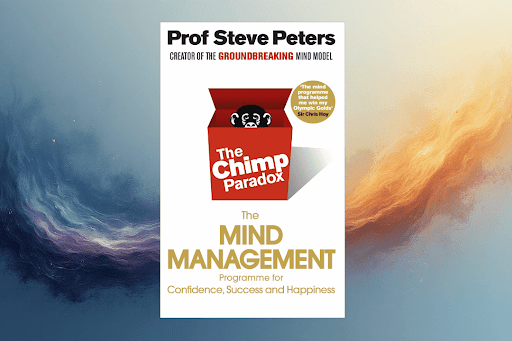
Have you ever reacted to a situation and immediately thought, “Why did I say that?” or “I wish I’d handled that differently”? You’re not alone and according to Dr Steve Peters, that’s not really you reacting at all. It’s your “inner chimp.”
In his bestselling book The Chimp Paradox, Dr Peters offers a simple yet powerful model of the mind that helps us understand our emotions, decisions, and behaviours and how to manage them more effectively. It’s a book that’s transformed the way athletes, teachers, parents, and leaders think about themselves and others. But it also holds a wealth of wisdom for anyone working with children, particularly those running clubs, classes, and activity programmes.
What’s Inside the Book:
At its heart, The Chimp Paradox explores the different parts of the human mind and how they shape our daily thoughts, emotions, and behaviours. It uses a clear and engaging metaphor to explain how the brain works:
- The Human represents our rational self, logical, thoughtful, and balanced.
- The Chimp is our emotional side, impulsive, protective, and sometimes irrational.
- The Computer is where habits, beliefs, and experiences are stored, guiding how we react based on past learning.
The “paradox” is that while the chimp can cause problems by overreacting, worrying, or sabotaging our goals it’s also vital for creativity, energy, and drive. The challenge is to manage the chimp, not fight it.
Through stories, practical exercises, and clear explanations, readers can learn to recognize when their “chimp” is in control, how to calm it, and how to train their minds to work more harmoniously.
Key Takeaways for Everyday Life
Even beyond professional settings, The Chimp Paradox offers insights that can reshape how we handle stress, relationships, and personal growth. Some of its most valuable lessons include:
- Understanding Emotional Hijackings
We all have moments when we “flip our lid.” The book helps us see that these moments are natural responses from our emotional brain not signs of weakness or failure. By recognising these responses, we can learn to pause and regain control. - Developing Better Self-Talk
It encourages readers to pay attention to the conversations happening inside their heads. The “chimp” often exaggerates, catastrophizes, or focuses on the negatives. By learning to respond to it calmly, we can reshape our mindset and make better choices. - Building Positive Habits
The “computer” stores our routines and beliefs, which means that repetition and consistency are key to personal change. If we consciously create positive habits in thinking, planning, or reacting they eventually become automatic. - Improving Relationships
Understanding that others have chimps too helps us respond to people with empathy. Instead of taking things personally, we can recognise when someone is acting from emotion rather than logic and respond more thoughtfully. - Setting and Achieving Goals
The book also explores motivation and success, highlighting that achieving goals is as much about managing emotions as it is about setting targets. By learning to keep the “chimp” calm, we can make clearer, more confident decisions about where we want to go and how to get there.
Why This Matters for Children’s Activity Providers
For those running children’s clubs, sports sessions, or creative classes, The Chimp Paradox offers a framework to understand behaviour not just in children, but in ourselves too.
Children often experience intense emotions but don’t yet have the tools to manage them. Recognising when a child’s “chimp” has taken over helps adults respond with empathy instead of frustration. For example:
- A child refusing to take part may be anxious or afraid of failure.
- A child acting out may be feeling overwhelmed or insecure.
- A child arguing with peers may simply be reacting emotionally before thinking logically.
By applying these principles, activity providers can create more emotionally supportive environments. Strategies such as calm communication, consistent routines, and positive reinforcement help children feel safe, confident, and in control. Equally important is recognising and managing our own emotional responses as leaders or instructors this helps us stay patient and grounded when sessions don’t go to plan. It’s emotional intelligence in action.
Beyond the Playroom: Why It Resonates with Everyone
While The Chimp Paradox is accessible and even playful in its tone, it deals with some of life’s biggest challenges: managing anger, anxiety, confidence, and motivation. Many readers describe it as a “manual for the mind” , one that gives them the tools to handle difficult emotions and make better decisions.
Whether you’re leading a team, raising a family, or simply trying to become a calmer, more self-aware version of yourself, the lessons from this book can be transformative. It’s about taking ownership of your inner world so you can navigate the outer one more effectively.
About the Author
Dr Steve Peters is a British psychiatrist and university lecturer renowned for his work in elite sport and performance psychology. He has worked with Team GB Olympic athletes, Liverpool FC, and numerous professionals seeking to improve their mental wellbeing and performance. His approach bridges science and practicality, translating complex neuroscience into everyday understanding.
Through The Chimp Paradox, Dr Peters invites us to see that mastering our minds is not about perfection it’s about awareness, compassion, and growth. For anyone guiding or supporting others, especially children, that message couldn’t be more important.