
Why Nursery Partnerships Are the Smart Growth Move for Providers in 2026
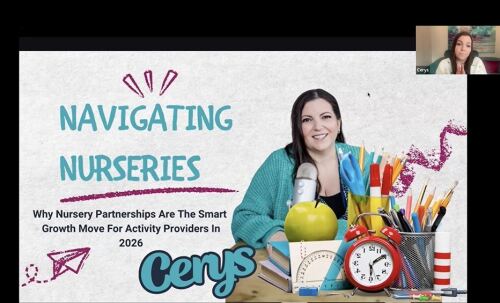
A practical guide for children’s activity businesses navigating a changing childcare landscape
If you run baby, toddler or pre-school classes, chances are something has felt “off” recently.
Numbers fluctuate more than they used to.
Children disappear mid-term.
Parents don’t commit in the same way.
This isn’t a marketing problem and it isn’t a reflection of the quality of your work.
It’s a structural change in childcare.
Across England, funded nursery places are now available from as young as nine months. As a result, many children who would previously have attended community classes are entering nursery far earlier often for several days a week.
For activity providers, this has quietly reshaped demand:
- Fewer under-threes available during the day
- Higher churn in baby and toddler classes
- Less predictability in income
At the same time, nurseries themselves are under increasing pressure. They are balancing staffing shortages, inspection expectations, parental demand for enrichment, and tighter scrutiny of funding.
Here’s the crucial point:
These pressures don’t cancel each other out they connect.
The providers who thrive in 2026 will be the ones who move closer to where children already are: inside nursery settings.
Why Nurseries Still Need You (Even When Budgets Are Tight)
A common belief circulating in the sector is that nurseries “can’t afford external providers anymore”.
In reality, nurseries are still booking specialists but only when the value is clear, justified and aligned with their priorities.
Nursery teams are stretched. While they are required to meet Early Years Foundation Stage (EYFS) requirements, many are operating at capacity just delivering the basics. At the same time, they are expected to demonstrate a broad, balanced curriculum and support whole-child development.
This is where specialist providers come in.
You are not duplicating what nursery staff already do.
You are:
- Adding expertise their team may not be trained in
- Increasing capacity without increasing staffing ratios
- Supporting outcomes nurseries are already being measured on
When your provision clearly links to development priorities such as physical development, communication and language, emotional regulation or cognitive skills it becomes far easier for nurseries to justify investment.
This shift is important:
Nurseries are not buying activities. They are investing in outcomes.
The Stability Advantage of Nursery Partnerships
One of the biggest benefits of nursery delivery is consistency.
Unlike community classes:
- You are not chasing parents for bookings
- Groups are already formed
- Attendance is reliable
- Sessions run week after week
Increasingly, providers are securing annual or rolling contracts, creating predictable income streams that community classes alone often can’t provide.
For many businesses, nursery work becomes the financial foundation:
- Core costs are covered
- Venue hire is removed
- Income becomes forecastable
This doesn’t mean replacing community classes. It means reducing reliance on them for survival.
Once stability is in place, public classes become profit rather than pressure and growth decisions become far less risky.
Understanding Funding Changes Everything
Confidence comes from understanding how nurseries actually fund external provision.
While nurseries cannot charge compulsory top-up fees for funded hours, this does not mean there is no money available. Many settings already use a combination of:
- Voluntary parental contributions
- Early Years Pupil Premium (EYPP)
- Parent-paid enrichment models
- PTA or school-based funding (for school nurseries)
In England, an important but often overlooked shift is that nurseries now receive more funding per child for babies than for three- and four-year-olds. This has opened the door for specialist provision in baby rooms an area many providers had never considered.
When you understand these funding routes, you’re no longer stopped by comments like:
“We don’t think we could afford that.”
Instead, you can confidently suggest alternatives based on real, working models used across the sector.
That confidence alone often changes a “no” into a conversation.
Why This Is a Long-Term Growth Strategy (Not a Short-Term Fix)
Nursery partnerships are not about quick wins or one-off bookings.
They are about building resilience first, then scaling.
Providers who use this model effectively:
- Diversify across different types of settings
- Avoid reliance on a single nursery group or chain
- Secure longer-term agreements rather than ad-hoc work
School-based nurseries, independent settings and mixed models all offer different funding routes and opportunities and diversification protects your income as the sector continues to evolve.
Looking ahead to 2026, one thing is clear:
Children’s activity businesses that rely solely on community classes will feel increasing pressure.
Those that position themselves as trusted nursery partners who understand funding, outcomes and operational realities will be far better placed to grow sustainably.
If you’ve tried approaching nurseries in the past, take the free Approaching Schools & Nurseries Quiz to discover your booking barriers at www.ceryskeneally.com/freebies
For more information visit Cerys Keneally at www.ceryskeneally.com
The webinar recording is also available in your members’ area. You can access it here